A Contango asset's journey mirrors how the grain market actually operates. Every stage carries its own validations, and nothing is recorded on the platform before they happen. Use the arrows below the scene to move through the cycle, one stage at a time.
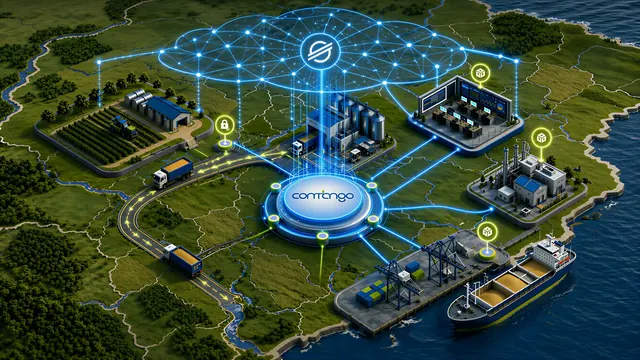
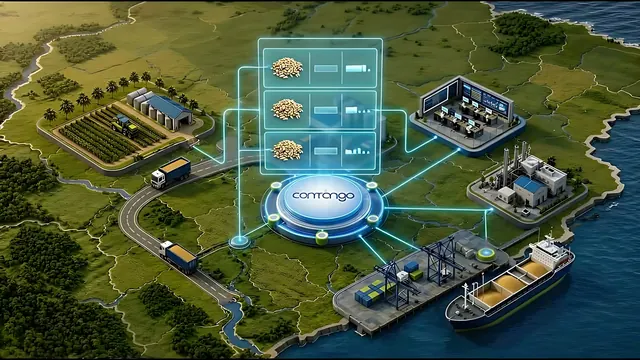
Farm, warehouse, processor, trading company and port. These are the same participants who already move Brazilian grain today — Contango replaces none of them. What it adds is a digital layer of trust connecting parties that previously dealt with each other through phone calls, paper and spreadsheets.
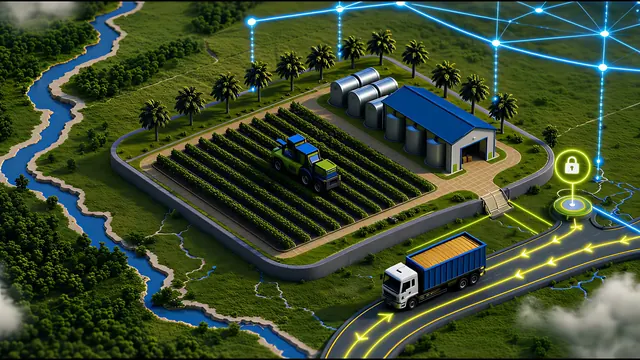
Before any grain becomes a digital record, the producer registers on the platform — themselves and every farm they own, lease or manage. Contango validates the documentation for each property and, from that point on, they are cleared to operate. This is the step that ties everything that follows to an identified origin: no validated registration, no operation.
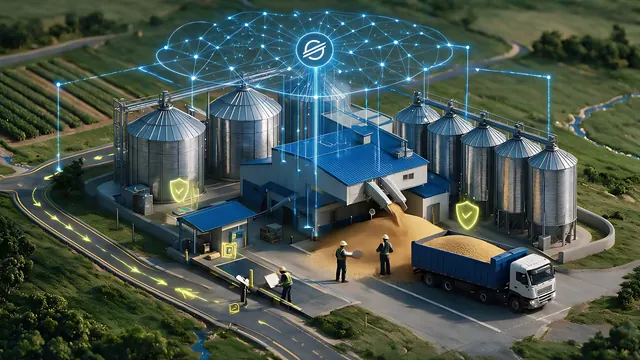
The physical operation does not change: the truck unloads, and the warehouse weighs, grades and stores it exactly as always. What changes is what comes next — with the lot received, the registered producer requests tokenization through the platform (asking for that grain to also exist as a digital record). And it does not have to be grain that just arrived: if they already have a lot on deposit with an inspection report issued, they can request tokenization of that lot, in whole or in part.
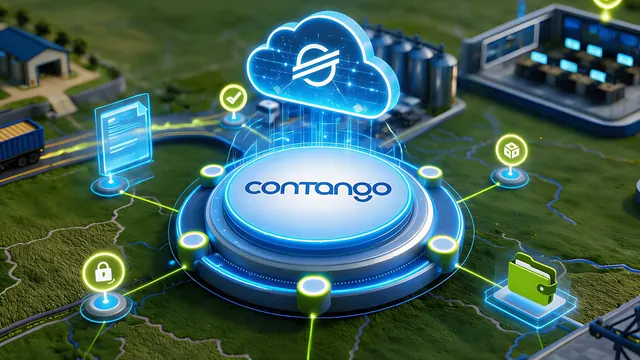
The request does not become a record right away. First the lot is inspected, and a report confirms the quantity and quality of what is stored. This is the first layer of trust — and it is not digital: it is the warehouse operator, named and accountable, attesting to what sits in the silo.
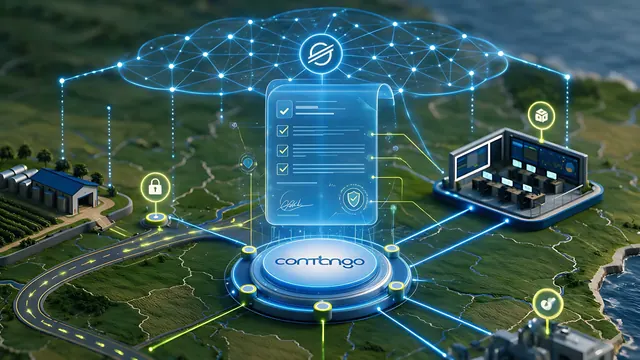
The confirmed report becomes a CDA — the Brazilian agricultural warehouse receipt, an instrument regulated by law since 2004. It is issued by the warehouse operator itself. Contango did not invent a new instrument: it digitises the process around one the market already knows.
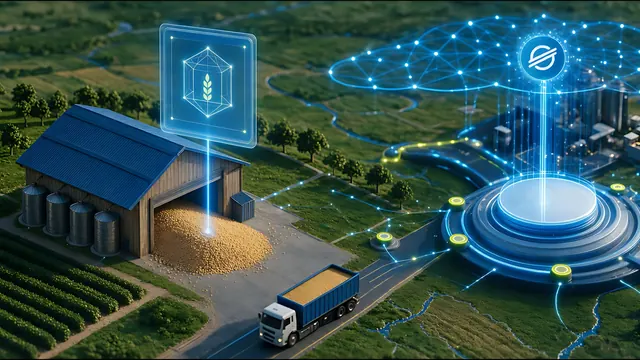
With the receipt issued, the Mint happens — the moment the stored lot also starts to exist in digital form. The infrastructure is the Stellar network, with Soroban smart contracts (programs that execute the operation's rules automatically). But the technology is the means, not the headline: what matters is that the record is unique, traceable and cannot be duplicated.
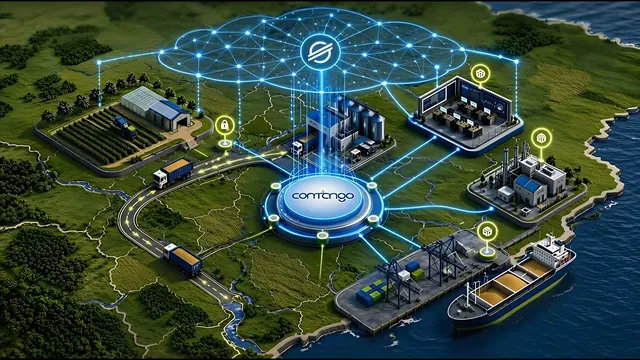
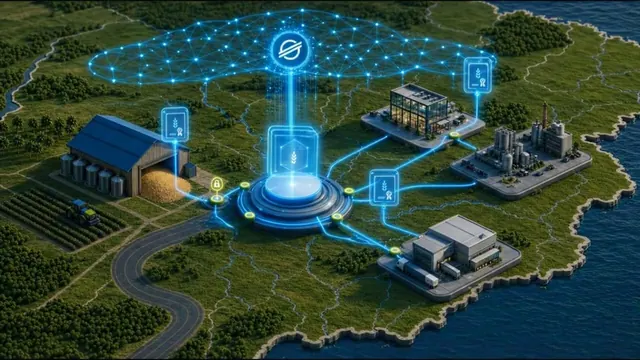
With the record created, the lot is no longer confined to the warehouse where it sits: it becomes visible to the rest of the ecosystem — processors, trading companies, ports. Nothing moved. What changed is who can see that grain, with origin and custody already proven.
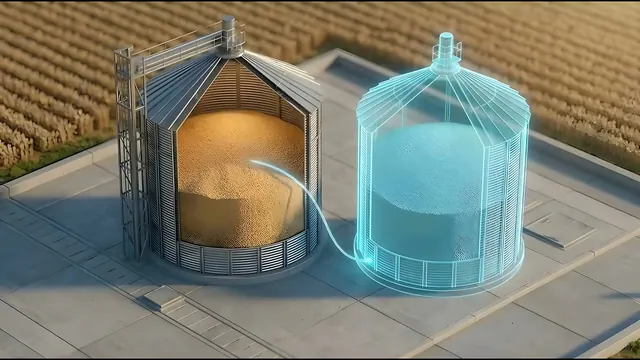
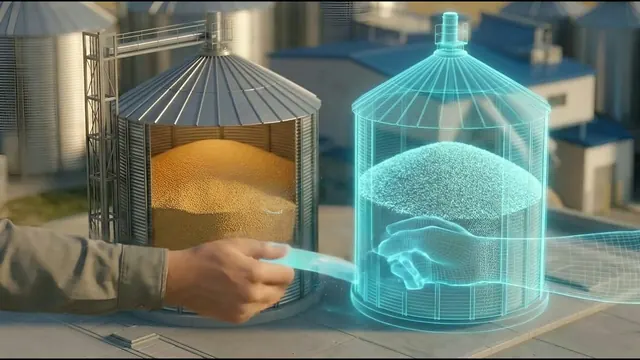
This is the image that explains the whole model. On the left, the physical lot. On the right, its digital counterpart. Every digital unit corresponds to a real quantity of inspected grain under custody — and the link between the two never breaks at any point in the journey.
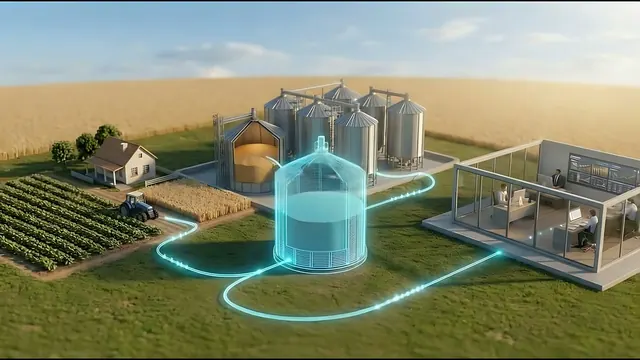
The holder of the asset may be the producer who deposited it, the warehouse operator who took grain as payment, or a buyer who acquired it earlier. All three operate through the same infrastructure — and the same rules apply to everyone, with no special treatment by size.
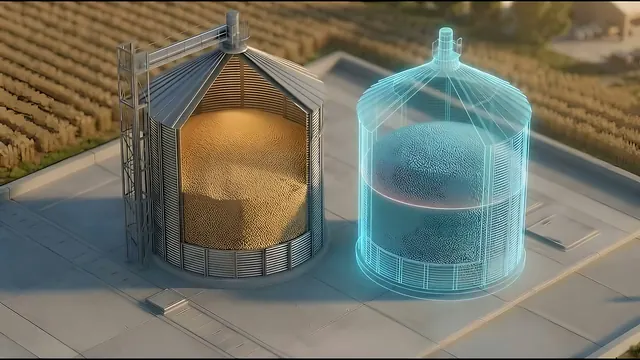
An offer is not all or nothing. The holder decides how much of the lot to trade and how much to keep — the line marks exactly where that limit was drawn. For anyone who needs cash without giving up their whole position, this is the difference between selling on your own schedule and selling on someone else's.
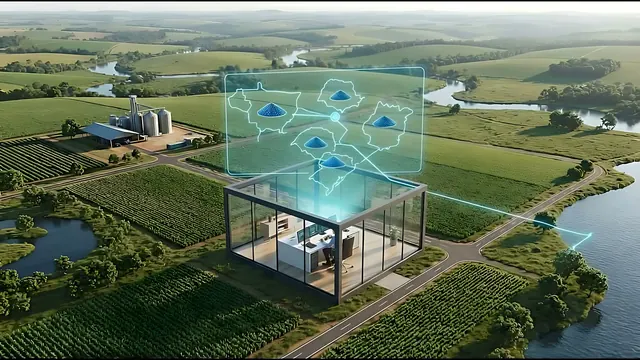
Today the buyer is whoever operates in your region — and less competition for your grain means less bargaining power. With origin already proven, the offer becomes visible to distant buyers. And it comes with the information that is usually missing at decision time: the price reference for each region and the cost of moving the grain there.
This is the marketplace where offers sit: volume, price and terms, with each lot's backing already verified by an integrated warehouse. Buyers stop sourcing purely through personal relationships — and sellers stop depending on whoever knocks on the door.
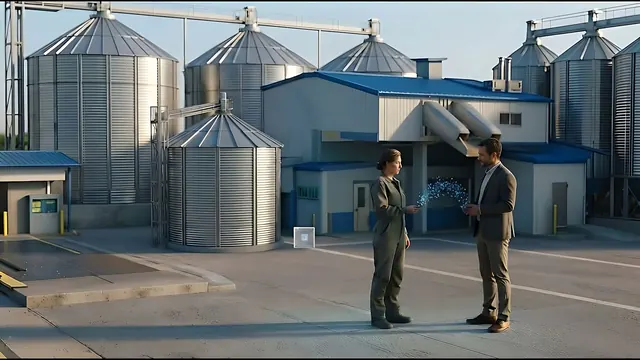
Behind all the technology, this is what it still comes down to: people in agribusiness dealing with people in agribusiness. When someone accepts an offer, buyer and seller settle payment directly between themselves. Contango is not part of that transaction — it records that the operation happened.
Ownership passes to the buyer and the full history goes with it. The lot stays exactly where it was, under the same custody, in the same quantity. This is where the operation stops depending on logistics to happen — selling and shipping stop being the same event.
At any moment the holder can request withdrawal. The physical grain is released by the warehouse — and only then is the corresponding digital record taken out of circulation, so that no digital asset ever exists without grain behind it. It is this order, not a promise, that prevents the same lot from being sold twice.
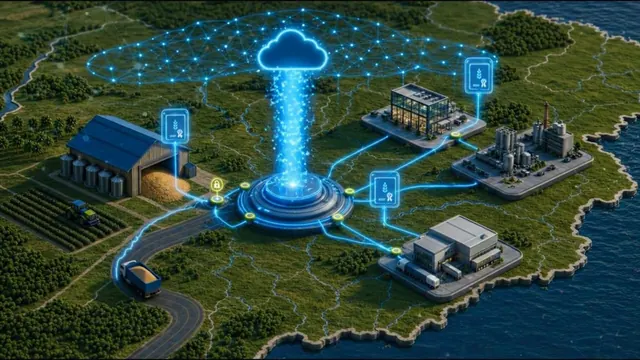
The operation ends when no balance remains tied to the contract. The truck pulls out with the grain, heading for its real destination — processor, port, export — and that is exactly where the difference shows: what remains is not a folder of filed paperwork, it is the record of everything that happened, still open to inspection. Where it came from, who attested to its quality, whose hands it passed through. That trail is what turns trust into something you verify rather than something you are promised.
Farm, warehouse, processor, trading company and port. These are the same participants who already move Brazilian grain today — Contango replaces none of them. What it adds is a digital layer of trust connecting parties that previously dealt with each other through phone calls, paper and spreadsheets.
Before any grain becomes a digital record, the producer registers on the platform — themselves and every farm they own, lease or manage. Contango validates the documentation for each property and, from that point on, they are cleared to operate. This is the step that ties everything that follows to an identified origin: no validated registration, no operation.
The physical operation does not change: the truck unloads, and the warehouse weighs, grades and stores it exactly as always. What changes is what comes next — with the lot received, the registered producer requests tokenization through the platform (asking for that grain to also exist as a digital record). And it does not have to be grain that just arrived: if they already have a lot on deposit with an inspection report issued, they can request tokenization of that lot, in whole or in part.
The request does not become a record right away. First the lot is inspected, and a report confirms the quantity and quality of what is stored. This is the first layer of trust — and it is not digital: it is the warehouse operator, named and accountable, attesting to what sits in the silo.
The confirmed report becomes a CDA — the Brazilian agricultural warehouse receipt, an instrument regulated by law since 2004. It is issued by the warehouse operator itself. Contango did not invent a new instrument: it digitises the process around one the market already knows.
With the receipt issued, the Mint happens — the moment the stored lot also starts to exist in digital form. The infrastructure is the Stellar network, with Soroban smart contracts (programs that execute the operation's rules automatically). But the technology is the means, not the headline: what matters is that the record is unique, traceable and cannot be duplicated.
With the record created, the lot is no longer confined to the warehouse where it sits: it becomes visible to the rest of the ecosystem — processors, trading companies, ports. Nothing moved. What changed is who can see that grain, with origin and custody already proven.
This is the image that explains the whole model. On the left, the physical lot. On the right, its digital counterpart. Every digital unit corresponds to a real quantity of inspected grain under custody — and the link between the two never breaks at any point in the journey.
The holder of the asset may be the producer who deposited it, the warehouse operator who took grain as payment, or a buyer who acquired it earlier. All three operate through the same infrastructure — and the same rules apply to everyone, with no special treatment by size.
An offer is not all or nothing. The holder decides how much of the lot to trade and how much to keep — the line marks exactly where that limit was drawn. For anyone who needs cash without giving up their whole position, this is the difference between selling on your own schedule and selling on someone else's.
Today the buyer is whoever operates in your region — and less competition for your grain means less bargaining power. With origin already proven, the offer becomes visible to distant buyers. And it comes with the information that is usually missing at decision time: the price reference for each region and the cost of moving the grain there.
This is the marketplace where offers sit: volume, price and terms, with each lot's backing already verified by an integrated warehouse. Buyers stop sourcing purely through personal relationships — and sellers stop depending on whoever knocks on the door.
Behind all the technology, this is what it still comes down to: people in agribusiness dealing with people in agribusiness. When someone accepts an offer, buyer and seller settle payment directly between themselves. Contango is not part of that transaction — it records that the operation happened.
Ownership passes to the buyer and the full history goes with it. The lot stays exactly where it was, under the same custody, in the same quantity. This is where the operation stops depending on logistics to happen — selling and shipping stop being the same event.
At any moment the holder can request withdrawal. The physical grain is released by the warehouse — and only then is the corresponding digital record taken out of circulation, so that no digital asset ever exists without grain behind it. It is this order, not a promise, that prevents the same lot from being sold twice.
The operation ends when no balance remains tied to the contract. The truck pulls out with the grain, heading for its real destination — processor, port, export — and that is exactly where the difference shows: what remains is not a folder of filed paperwork, it is the record of everything that happened, still open to inspection. Where it came from, who attested to its quality, whose hands it passed through. That trail is what turns trust into something you verify rather than something you are promised.
Nothing is recorded on the platform before every check of existence, quality and custody of the physical asset has been made.
Smart contracts execute the agreed conditions — leaving no room for manual manipulation of the process.
Each token stays tied to its contract and to the asset it came from, from Mint to Burn, with a permanent and auditable history.
Stage names are not translated — Mint and Burn are the cycle's official terminology.
The audit trail behind every stage is described in detail on its own page. For anything else, you reach the team directly — there is no form here.